



Kapha dosha, one of the three dosha types in Ayurveda, stands for stability, strength and grounding. This is due to the dominant elements of earth and water.
As a Kapha type, you are very popular with your friends. You are friendly, compassionate and reliable and always have an open ear for the problems of others.
Sometimes the characteristics of Kapha can also be challenging. The digestive fire “Agni” comes to a standstill and more metabolic residues (“Ama”) build up, which can block your circulation channels (“Shrotas”). A feeling of heaviness, an increased need for rest or a tendency to eat satiating foods can become noticeable.
This is exactly where the right diet comes in. Because in Ayurveda, nutrition is one of the most important means of bringing the doshas back into balance.
With a diet tailored to Kapha, you can feel lighter and more vital.
Ayurvedic nutrition for Kaphas
Ayurvedic nutrition is not only based on the theory of types. The principle of flavors (sweet, sour, salty, spicy, bitter, tart) is also used to balance Kapha, Pitta or Vata. This is because the flavors can have a balancing or strengthening effect on the respective doshas.
If you have a strong Kapha dosha, you can hardly resist particularly fatty and heavy foods, whether it is cheese or rich cream cakes. You should avoid sweet, heavy, oily and cold foods.
Instead, opt for easily digestible, warm foods with spicy, tart and bitter flavors!
Which foods are best?
Pungent foods, herbs and spices add spice to your meals and can be perceived as stimulating. These include, for example:
- Ginger, turmeric, asafoetida, cloves, mustard, cardamom, pepper and chili,
- onion and garlic and
- spicy vegetables such as radishes, radishes and leeks.
Also bitter vegetables such as - green leafy vegetables,
- all types of cabbage,
- artichokes,
- eggplants,
- asparagus,
- fennel,
- celery,
- mushrooms and
- chicory and radicchio or
- the powder made from dried amla fruits
are particularly good for you. Many of these foods are valued in Ayurvedic cuisine because they are considered balancing.
You can also help yourself to bitter-sour fruits such as grapefruit, passion fruit, rhubarb or cranberries. However, always eat them separately from other foods and preferably warm! This is because cooked foods that are prepared warm support the digestive fire.
When it comes to proteins, it is best to opt for plant-based foods such as peas, chickpeas, lentils or adzuki beans, which you can combine with easily digestible cereals. Dairy products, animal proteins, especially red meat and cereals containing gluten should be reduced as much as possible.
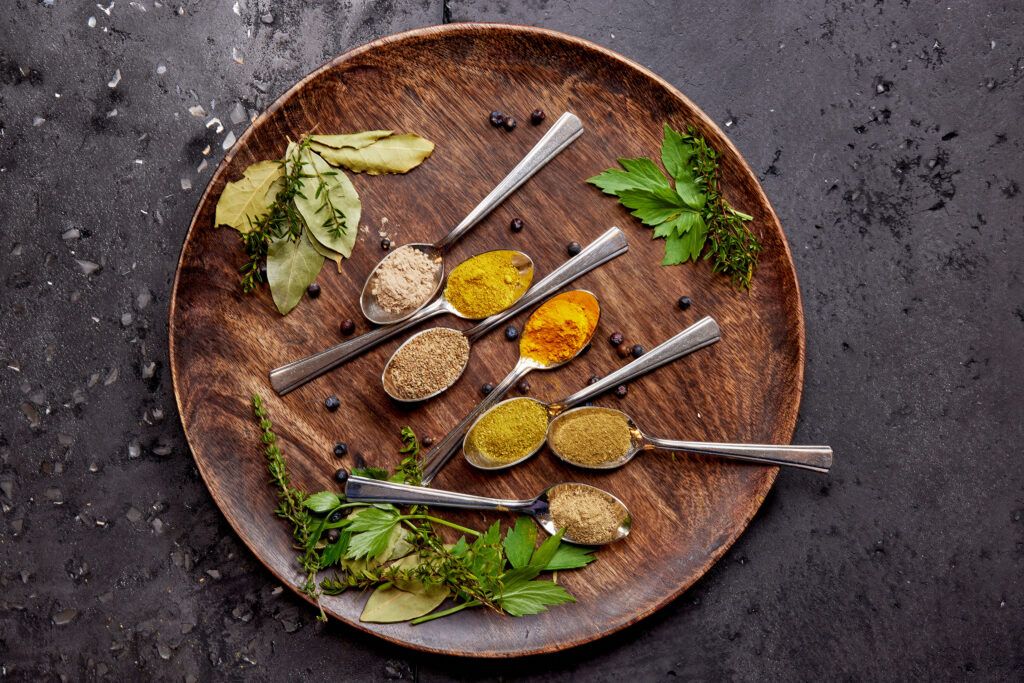
Refined and delicious: Kapha nutrition can be so versatile
To give you a taste of how delicious the Kapha diet in Ayurveda can be, we will show you a recipe from our Ayurveda restaurant at the Ayurveda Resort Mandira for you to try. Our cuisine combines the proven knowledge of Ayurveda with local ingredients to create the ultimate indulgence.
Try out the following recipe and be inspired!
Recipe: Stuffed organic kohlrabi with turmeric rice and coarse mustard sauce
You will need the following ingredients:
- 4 organic kohlrabi
- 100 grams of basmati rice
- 200 milliliters of water
- approx. 50 grams of finely diced root vegetables (celery, carrots)
- 20 grams chickpea flour
- 2 teaspoons of turmeric
- 1 teaspoon of long pepper and black cumin
- and 2 tablespoons of ghee
How to prepare the dish:
Peel the kohlrabi and hollow it out! Then cook it in salted water until it is al dente and rinse it with ice water!
For the vegetable rice, heat a pan with the water and add some salt and ghee, turmeric, root vegetables and rice and cook for a good 10 minutes! Then remove the pan from the heat and leave the rice to simmer for another 10 minutes with the lid on!
Next, roast the pepper and black cumin in ghee and add both to the rice! Then mix in the chickpea flour and fill the hollowed-out kohlrabi with the vegetable rice!
Cover the stuffed kohlrabi and cook in the oven at 170 °C for approx. 10 minutes.
During this time, you can prepare the sour, spicy mustard sauce.
You will need: - 20 grams of ghee
- 100 grams of diced celeriac
- 200 milliliters of vegetable stock
- 50 milliliters of coconut milk
- 2 tablespoons of black mustard seeds
- Some fennel seeds, cumin, turmeric, black pepper and salt
Roughly crush the spices in a mortar and fry them briefly in ghee with the celery! Now deglaze everything with vegetable stock and coconut milk!
Allow the sauce to simmer gently over a low heat for approx. 20 minutes! Finally, puree the sauce and strain through a fine sieve! Season to taste with salt one last time and pour the warm sauce over the stuffed kohlrabi!
What else should you pay attention to in your diet?
In addition to the choice of food and suitable preparation, there are also some habits that can help you find a healthy balance.
As a Kapha type, habits that ensure lightness and balance can help you. This includes regular exercise.
- Sport and exercise before meals rev up your metabolism.
- A walk after eating, on the other hand, helps you to digest your food better. Another positive side effect: you feel less heavy and tired after eating and have more energy.
- Eating regularly also helps you to get a better grip on your hunger. Try to eat at the same time every day and avoid snacks as often as possible! Snacks put additional strain on your digestion. On the other hand, breaks between meals of three to five hours can make a big difference.
- A glass of hot water in the morning is part of the traditional Ayurvedic routine and is often perceived as beneficial.