

Constantly tired, easily irritable or simply out of balance? The answer may lie deeper than you think – in your dosha. This basic Ayurvedic principle determines how you feel, think and live. Understanding your individual interplay of Vata, Pitta and Kapha opens the door to more vitality and inner harmony. And this is exactly where your journey begins.
The most important facts in brief:
- Individual constitution: Each person has a unique mixture of the three doshas Vata, Pitta and Kapha, which determines their physical and mental characteristics.
- Balancing principle: Health is achieved by balancing the doshas, with specific dietary and lifestyle recommendations for each type.
- Vata: People with dominant Vata are creative and agile, but need warmth, regularity and nourishing food to maintain their balance.
- Pitta: Pitta types are characterized by intelligence and assertiveness, but need cooling influences and moderation for balance.
- Kapha: Kapha-dominated people are steady and balanced, but benefit from activation and a light, spicy diet.
Contents
- What are the doshas in Ayurveda?
- The 3 Ayurveda types: Vata, Pitta, Kapha
- Practical tips for Dosha balance
- Find your dosha balance at the Ayurveda Resort Mandira
- Frequently asked questions
What are the doshas in Ayurveda?
The doshas are fundamental bioenergies that control all physical and mental functions. Every person carries all three doshas within them, but in their own individual composition. This personal basic constitution is called Prakriti in Ayurveda and remains relatively constant throughout life.
The doshas arise from the combination of the five basic elements: ether, air, fire, water and earth. Each dosha performs specific tasks in the body and has characteristic properties. When the doshas are in balance, we experience health and harmony.
An imbalance of the doshas, known as vikriti in Ayurveda, can be caused by an unsuitable diet, stress, lack of exercise or other lifestyle factors. This disharmony is considered the root of many complaints and illnesses.
Ayurveda
Ayurveda literally means “knowledge of life” and is a therapy system from India that is over 2000 years old. In India and Sri Lanka, Ayurveda is recognized as state medicine and is practised alongside conventional medicine. Find out more about Ayurveda in our guide.
The 3 Ayurveda types: Vata, Pitta, Kapha
The three doshas represent different principles and functions in the body. Each person has a unique mixture of these energies, with one or two doshas usually dominating. The personal constitution generally remains stable, while temporary imbalances can be corrected through targeted measures. Knowing your individual dosha profile makes it possible to adapt your diet and lifestyle optimally.
| Dosha | Elements | Properties | Balance | Imbalance |
|---|---|---|---|---|
| Vata | Air, ether | light, flexible, cold, dry | Creativity, flexibility, enthusiasm | Nervousness, insomnia, indigestion |
| Pitta | Fire, water | hot, sharp, penetrating | Intelligence, leadership, determination | Irritability, inflammation, impatience |
| Kapha | Water, earth | heavy, slow, cold, damp | Stability, endurance, serenity | Sluggishness, weight gain, emotional clinging |

Vata: Air and Ether
Vata embodies the principle of movement and regulates all activities in the body – from breathing and circulation to the nervous system and flow of thoughts. People with dominant Vata are creative, lively and flexible. They typically have a slim build, dry skin and react sensitively to changes.
A balanced Vata ensures enthusiasm, spontaneity and quick comprehension. In the event of an imbalance, symptoms such as nervousness, sleep disorders, digestive problems and a feeling of inner restlessness can occur. Vata is particularly intensified by cold, dryness and irregular routines.
Pitta: fire and water
Pitta stands for transformation and metabolism. It regulates digestion, body temperature and biochemical processes. Pitta-dominant people are determined, decisive and have a sharp intellect. Physically, they are characterized by medium stature, warm skin and good muscle tone.
In balance, Pitta gives assertiveness, clarity and leadership qualities. Excessive Pitta can manifest as irritability, impatience, inflammation and indigestion. Heat, spicy food and excessive competition increase Pitta imbalances.

Kapha: water and earth
Kapha represents structure and stability. It is responsible for physical strength, immune function and emotional balance. Kapha types are persistent, patient and loyal. They often have a stronger build, supple skin and thick, shiny hair.
A balanced Kapha ensures calmness, stability and compassion. When imbalanced, signs such as sluggishness, weight gain, congestion and emotional holding can occur. Dampness, heaviness and lack of movement increase Kapha imbalances.
Find your dosha
Get to know your Ayurvedic constitution – for more balance, clarity and vital energy in everyday life. Take the Dosha test and receive personalized recommendations.
Practical tips for Dosha balance
Harmonizing the doshas begins with simple, everyday measures. The principle of balancing through opposites is central to this: What is too much is reduced; what is lacking is supplemented. Regularity in the daily routine and meals forms the basis for all dosha types.
There are specific recommendations for each constitutional type that compensate for imbalances. Small, consistently implemented changes that become a long-term habit are particularly effective. The seasons also influence the doshas and require seasonal adjustments.
| Aspect | Vata | Pitta | Kapha |
|---|---|---|---|
| Morning rituals | Warm water with lemon or ginger, sesame oil abhyanga, light stretching exercises or yoga | Warm water with lemon or ginger, coconut oil abhyanga, light stretching exercises or yoga | Warm water with lemon or ginger, mustard oil abhyanga, activating exercises in the morning |
| Stress management | Grounding practices: slow yoga, meditation, conscious breathing breaks | Cooling techniques: moon-oriented breathing exercises, spending time in nature, conscious breathing breaks | Activating movement, stimulating practices |
| Sleep | approx. 8 hours of sleep, warm and cozy environment, digital time-outs, warm foot bath | 7-8 hours of sleep, cool, well-ventilated environment, digital time-outs, warm foot bath | 6-7 hours of sleep, light and fresh surroundings, digital time-outs, warm foot bath |
| Nutrition | warm, nourishing, slightly oily; regular meals | Cooling, with sweet and bitter flavors; freshly prepared | light, warm, spicy; freshly prepared |
| Lifestyle | Sufficient rest, structure in the daily routine, regular routines | Balanced working hours, no excess of competition, moderation | New challenges, start actively in the morning, avoid inertia |
Morning rituals
The start of the day sets the tone for the hours ahead. Start with a glass of warm water with a little lemon or ginger to gently stimulate the metabolism and eliminate toxins. This simple practice particularly supports the Vata and Kapha balance.
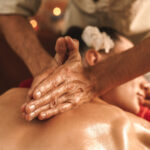
A short self-massage with warm oil (abhyanga) before showering calms the nervous system and nourishes the skin. Different oils are suitable for different constitutions: sesame oil for Vata, coconut oil for Pitta and mustard oil for Kapha. Supplement your morning ritual with light stretching exercises or yoga to activate the flow of energy.
Stress management
Stress increases dosha imbalances and impairs health. Regular periods of relaxation are therefore essential. Conscious breathing breaks of just five minutes can calm the nervous system and reduce stress – particularly important for Vata and Pitta types.
For Vata dominance, grounding practices such as slow yoga and meditation also help. Pitta types benefit from cooling techniques such as moonlight-oriented breathing exercises and spending time in nature. Kapha natures need activating movement and stimulating practices to find inner balance.
Sleep and relaxation
Quality sleep is essential for the regeneration of all doshas. Strive for regular sleeping times and create calming evening routines. Vata types need more sleep (around 8 hours), while Pitta and Kapha types can get by on 7-8 and 6-7 hours respectively.
Digital time-outs before going to bed significantly improve the quality of sleep. A warm foot bath has a calming effect on the nervous system and can be supplemented with essential oils. Ensure a pleasant, dosha-appropriate sleeping environment: warm and cozy for Vata, cool and well-ventilated for Pitta, light and fresh for Kapha.
Diet and lifestyle to strengthen the doshas
Ayurvedic nutrition is a key element in harmonizing the doshas. Each constitutional type requires specific foods and preparation methods in order to find balance. At the center of this is the digestive fire Agni, which should work optimally.
Warm, nourishing and slightly oily foods are ideal for Vata nutrition. Pitta nutrition should contain cooling foods with sweet and bitter flavors. Kapha nutrition should focus on light, warm and spicy foods. Freshly prepared meals are beneficial for all doshas in Ayurveda.
In addition to diet, physical activity and daily rhythm play an important role. The right form of exercise differs according to constitution: Vata needs gentle, regular exercise, Pitta moderate activity without overheating, and Kapha vigorous, stimulating exercise. The combination of the right diet, exercise and daily structure creates sustainable dosha balance.
Find your dosha balance at the Ayurveda Resort Mandira
At the Ayurveda Resort Mandira, you will experience how traditional Ayurveda knowledge and modern health concepts work together harmoniously. Our individually tailored programs take into account your personal Dosha constitution and current phase of life. With the combination of Ayurvedic treatments, medical care and thermal water, we offer a holistic path to sustainable health.
Rediscover your balance
Balance your doshas with a tailor-made Ayurveda treatment at the Mandira Resort. Holistic, individualized, and deeply effective.
Frequently asked questions
What does the term “dosha” mean in Ayurveda?
In Ayurveda, the term “dosha” literally means “that which can become unbalanced” and refers to the three basic bioenergies Vata, Pitta and Kapha, which control all physical and mental functions.
How do the seasons influence the doshas?
The seasons influence the dosha by intensifying a particular one: Vata dominates in autumn with dryness and wind, Kapha in winter and spring with cold and humidity, Pitta in summer with heat and intensity.
Which dosha causes mental illness?
In Ayurveda, a significantly elevated Vata dosha is associated with psychological problems such as nervousness, anxiety, and sleep disorders. An excess of Pitta can also lead to irritability and aggression. However, psychological illnesses usually arise from complex imbalances and require an individual Ayurvedic analysis.
Can you recognize the dosha by the zodiac sign?
No, the dosha cannot be determined by the zodiac sign. Ayurveda is based on physiological, psychological, and constitutional characteristics, not on astrological classifications. The individual dosha constitution is determined by external characteristics, behavior, and reactions – not by birth date or zodiac sign.
Cover image: © Monstar Studio – stock.adobe.com; Image 1: © pinglabel – stock.adobe.com; Image 2: © ftomarchio – stock.adobe.com; Image 3: © wildman – stock.adobe.com; Image 4: © NicoElNino – stock.adobe.com